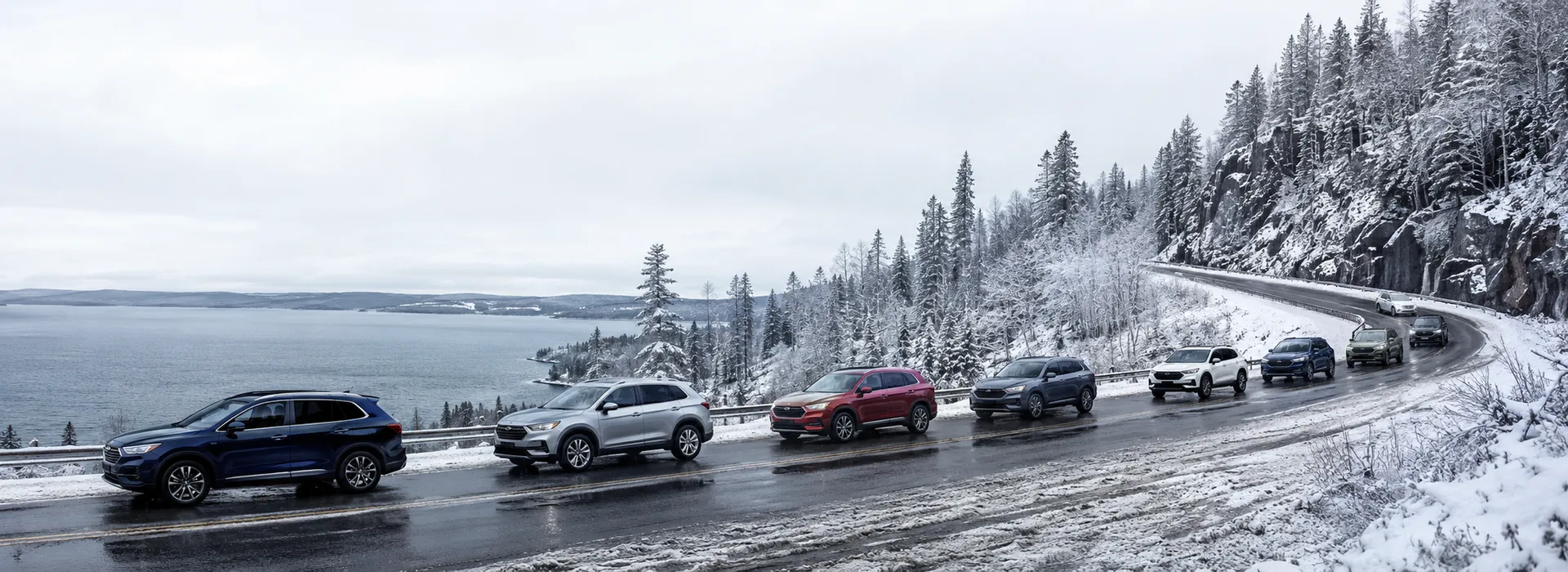
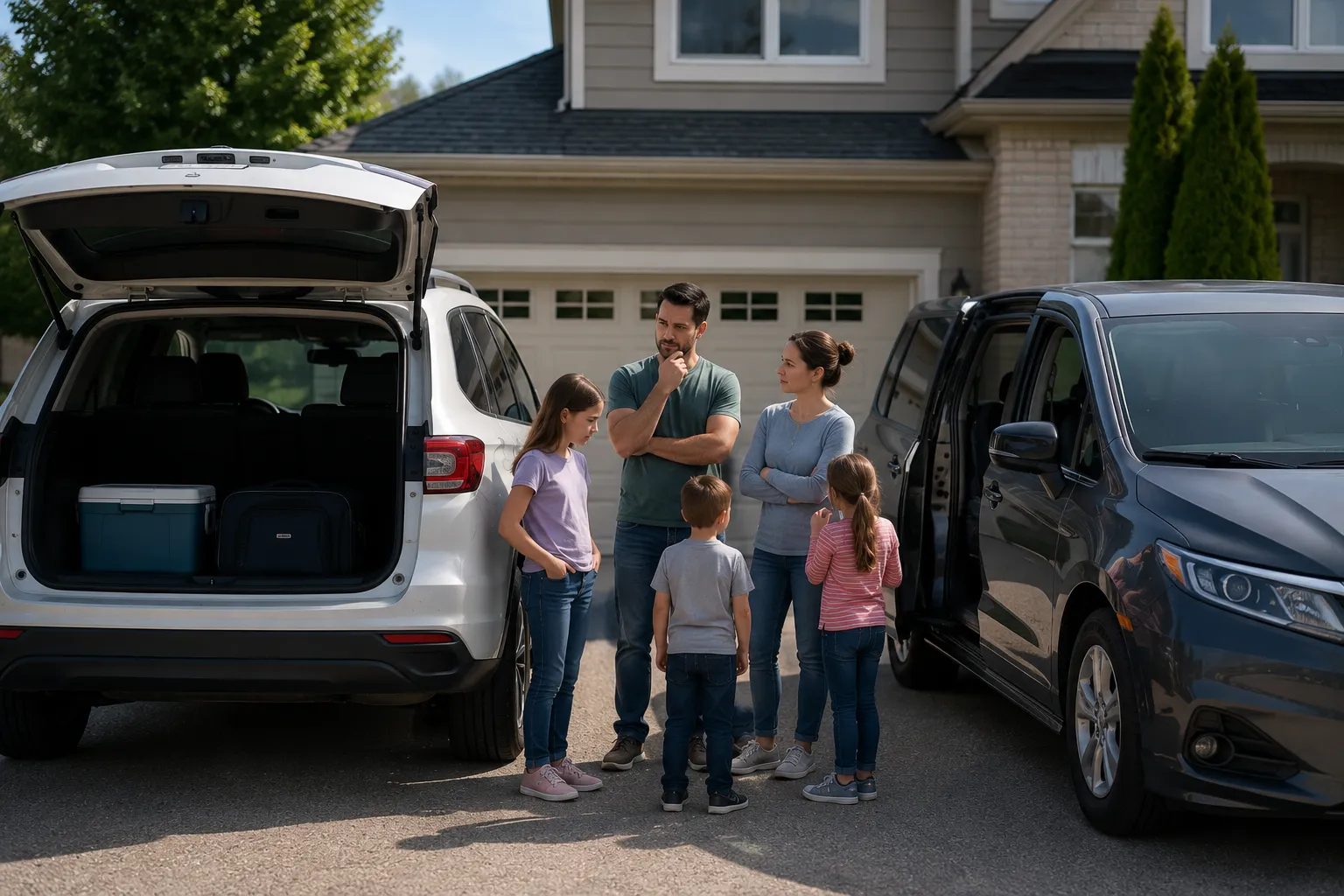
Ontario winter driving creates a lot of confusion around AWD and 4WD. Many buyers assume four driven wheels automatically means safer winter driving, but traction is only part of the equation. Tires, ground clearance, stability control, driver habits, road conditions, vehicle weight, and maintenance all matter. The right choice depends on whether you are commuting on plowed roads in London, travelling rural concessions, towing a trailer, or crawling through deep snow at a job site.
What AWD Actually Does
All-wheel drive is common in crossovers such as the Subaru Forester, Toyota RAV4, Honda CR-V, Mazda CX-5, Ford Escape, and Hyundai Tucson. Most modern AWD systems operate automatically. Sensors watch wheel speed, throttle input, steering angle, and traction loss, then move power between the front and rear wheels as needed.
Some systems are more proactive than others. Subaru is known for full-time AWD layouts in many models. A RAV4 or CR-V often drives primarily like a front-wheel-drive vehicle until the system sends torque rearward. For a normal commuter, that automatic behaviour is a major advantage. There is no lever to pull, no transfer case to engage, and no need to think about whether the pavement is dry, slushy, icy, or wet.
AWD is best for mixed winter conditions: snowy subdivisions, slushy parking lots, on-ramps, wet highways, and uneven traction. It helps the vehicle get moving and maintain composure when grip varies from wheel to wheel. It does not shorten stopping distance on ice. That job belongs mostly to tires and braking control.
What 4WD Does Differently
Four-wheel drive, especially part-time 4WD, is more common on pickup trucks and traditional off-road SUVs such as the Jeep Wrangler. A part-time 4WD system uses a transfer case to mechanically send power to both axles. Many trucks have 2H for normal driving, 4H for slippery surfaces, and 4L for low-speed torque multiplication.
4H can be very useful on snow-covered rural roads, unplowed lanes, job sites, boat launches, farms, and cottage roads. 4L is more specialized. It matters when you need slow, controlled pulling power: deep snow, off-road trails, steep loose surfaces, or moving a trailer in slick conditions. Most city commuters will rarely need 4L, even if it sounds impressive in a brochure.
Part-time 4WD should not be used casually on dry pavement unless the manufacturer allows it. Binding can happen because the system may not permit enough speed difference between front and rear axles during turns. Full-time 4WD systems and automatic 4WD modes are more flexible, but buyers should still understand what their specific vehicle offers.
Winter Tires Beat Drivetrain More Often Than People Expect
Here is the plain dealership answer: winter tires usually make a bigger safety difference than AWD or 4WD. AWD helps you accelerate. Winter tires help you accelerate, turn, and stop. On icy roads, stopping distance is often where the real danger lives. A front-wheel-drive sedan on quality winter tires can feel more controlled than an AWD SUV on worn all-seasons.
That does not mean AWD is pointless. AWD plus winter tires is an excellent combination for Ontario. But if the budget forces a choice between AWD with weak tires or front-wheel drive with proper winter tires, the tire decision deserves serious respect.
Traction control and stability control also help. Traction control reduces wheelspin when accelerating. Stability control can apply braking to individual wheels to help correct a skid. These systems work best when the tires can actually grip the surface. Electronics cannot create traction out of a bald tire on polished ice.
Practical tip: When comparing winter vehicles, price out a proper set of winter tires before stretching your budget for AWD or 4WD. The tire bill is part of the real ownership cost.
Ground Clearance, Salt, and Real Ontario Wear
Ground clearance matters when snow builds up at the end of a driveway, on rural shoulders, or in a parking lot after the plow has gone through. A compact SUV with AWD may clear snow that a low sedan drags through. A truck may sit higher still, but height brings tradeoffs: more weight, higher fuel use, and sometimes a less settled feel on icy pavement.
Ontario road salt is another factor. Trucks and body-on-frame SUVs expose frames, suspension mounts, brake lines, fuel lines, and underbody components to corrosion. A used 4x4 truck may look great from the outside while the frame tells a different story underneath. Buyers should inspect rocker panels, cab corners, box supports, rear frame sections, hitch areas, and suspension mounting points.
AWD crossovers can also rust, but truck frames deserve special attention. If you are buying a used pickup for winter duty, get underneath it or have it inspected. A shiny body does not cancel out scale, soft spots, or patched metal.
Who Should Buy AWD, and Who Should Buy 4WD?
AWD fits most Ontario commuters. If you drive in London, St. Thomas, Woodstock, Strathroy, or along the 401 on plowed roads, a compact or midsize AWD SUV with winter tires is usually the practical sweet spot. You get added traction without the fuel penalty and mechanical complexity of a heavier 4WD truck.
4WD is the better tool for rural properties, farms, construction sites, frequent towing, deep snow, hunting roads, trailers, and buyers who need low-range gearing. If you pull a snowmobile trailer, launch boats, travel unmaintained lanes, or work where plows arrive late, 4WD earns its keep.
Insurance and fuel economy can tilt the decision. A 4WD pickup may cost more to fuel and insure than an AWD compact SUV. Tires may be larger and more expensive. Brakes and suspension components may cost more. The capability is real, but so is the operating cost.
The Car Guy team can help you compare drivetrain, tire setup, ground clearance, fuel use, and budget before you choose. You can review available winter-ready options in inventory or ask a question through contact if you are unsure which setup fits your driving.
Frequently Asked Questions
Is AWD safer than 4WD on icy highways?
Not automatically. AWD may feel smoother on changing road surfaces, but winter tires, speed, stability control, and driver input have a bigger impact on braking and steering.
When would I actually use 4WD-Lo?
4WD-Lo is useful for low-speed situations that need extra torque, such as deep snow, steep loose surfaces, off-road trails, or carefully moving a trailer on slick ground.
Do AWD SUVs use more fuel than front-wheel-drive SUVs?
Usually, yes. The difference varies by model, but AWD adds weight and driveline drag. Many buyers accept the extra fuel use for winter confidence.
Can rust make a used 4x4 a bad buy?
Yes. Frame corrosion, brake-line rust, seized components, and weak mounting points can turn a capable truck into an expensive problem.
Is a Jeep Wrangler better than an AWD crossover for winter commuting?
A Wrangler is excellent in certain deep-snow and off-road conditions, but an AWD crossover may be quieter, more efficient, and easier to live with for daily paved-road commuting.